
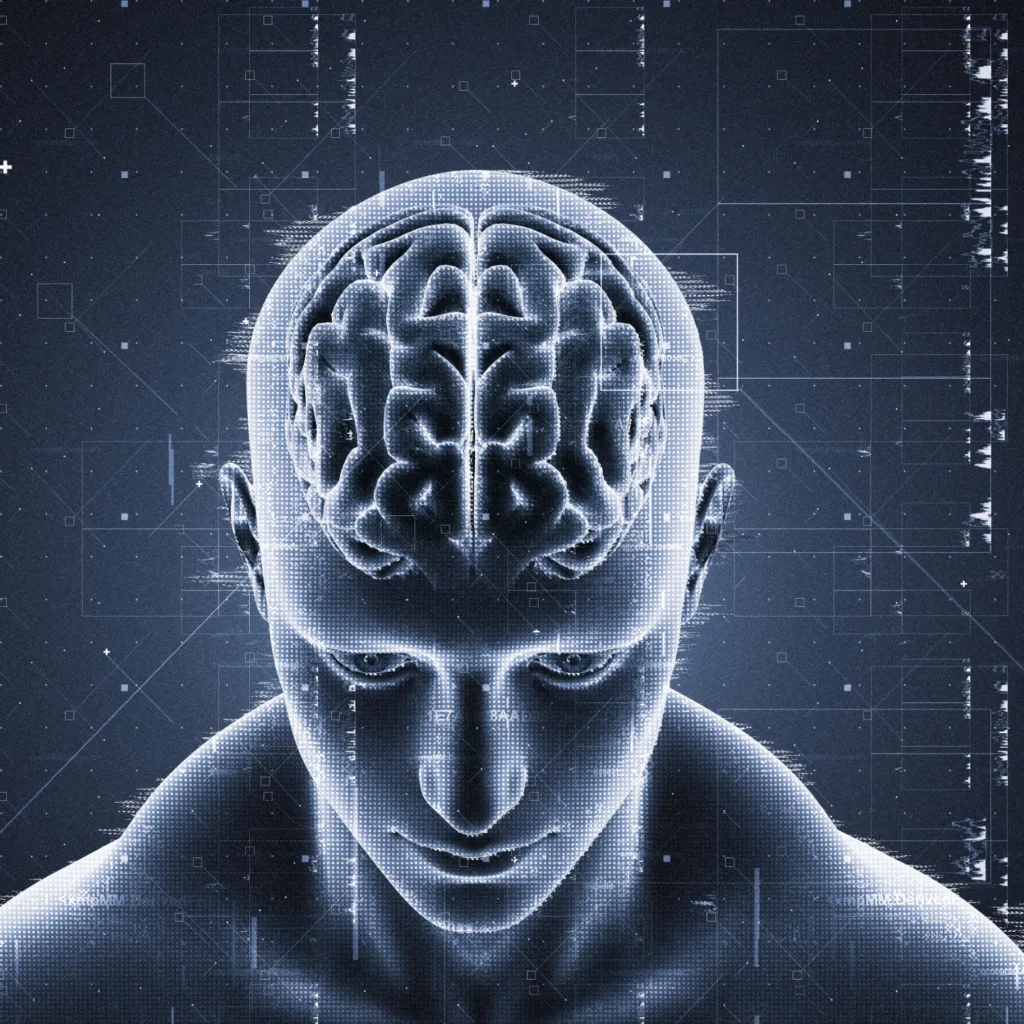
Brain neuroplasticity is the brain's ability to modify the way it works and to reorganise neural connections in response to experience. Thanks to it, people can learn, remember, develop new skills and flexibly adapt their behaviour to changing conditions. However, the potential of the human brain is neither unlimited nor something that can be activated with a single exercise. Nor is there a single universal measure describing the full extent of its capabilities. Much depends on biological factors, age, health and environment, as well as on sleep quality, physical activity and the way you learn every day.
The potential of the human brain – what does it really mean?
The potential of the human brain is not a hidden store of energy that can suddenly be switched on. In scientific terms, it refers to the nervous system's ability to process information efficiently, form memory traces, control attention, plan and draw conclusions from experience. The brain's capabilities result from the harmonious cooperation of many interconnected areas, not from the activity of a single "intelligence centre". Executive functions play a key role here, allowing us to stay with a chosen goal, inhibit unwanted impulses and flexibly modify our strategy. For this reason, mental development is a long-term process rather than a one-off breakthrough.
What is brain neuroplasticity?
Brain neuroplasticity is its ability to change under the influence of learning, new experiences and environmental conditions. When you acquire knowledge, practise a specific skill or form a new habit, neurons begin to communicate in a slightly different way. Frequently used connections between them can grow stronger, while those used less often gradually weaken. The brain can also form new connections and partly reorganise the way it works, for example after an injury. Neuroplasticity therefore means that the nervous system is not an unchanging structure but can adapt throughout life. It is worth remembering, however, that the brain consolidates both beneficial skills and bad habits if they are repeated regularly.
Neuroplasticity and learning new things
Neuroplasticity and learning are closely linked, because repeated experiences gradually transform the way neural networks function. Acquiring new skills – whether linguistic, motor or procedural – initially requires considerable attention. Over time, individual operations become faster and more automatic. The brain's assimilation of new content involves encoding information, strengthening memory traces, consolidating them and later retrieving them. The effect of learning on brain structure is most noticeable when the task is an appropriate challenge and practice is spread out over time.
The brain and the process of memorising information
Memorising is not a single mechanism but a sequence of successive stages. First, attention selects the incoming stimuli, then working memory briefly holds the necessary content, and the consolidation process turns an unstable record into a stable memory. Human memory includes, among other things, episodic, semantic and procedural components, which is why facts, life events and learned movement patterns are stored in different ways. Retrieval is not like opening a perfect file – a memory is reconstructed each time and can be modified under the influence of new information, emotions and context.
Cognitive abilities and executive functions of the brain
Cognitive abilities include attention, memory, language, spatial orientation, reasoning, information-processing speed and control of action. The brain's executive functions, directly linked to working memory, response inhibition and cognitive flexibility, play a special role. They make it possible to stay focused despite distractions, analyse alternative solutions and change plans efficiently when circumstances require it. Individual cognitive abilities do not always develop evenly – you may memorise facts easily and at the same time switch attention more slowly. That is why a reliable assessment of mental abilities should take a variety of tasks into account rather than rely on a single test result.
How to develop your brain's potential every day?
In practice, developing your brain's potential brings the best results when it combines learning, adequate recovery and a gradual increase in difficulty. Memory and concentration exercises should be based on actively recalling material, not just passively re-reading it. It is also worth changing the learning context and applying the instinct you have gained to new challenges – a higher score in a single logic game does not automatically translate into an overall improvement in cognitive function.
- Learn in shorter sessions spread out over time.
- Try to recall the material from memory without reaching for your notes.
- Link new information to knowledge you already understand well.
- Develop a variety of skills – from language and movement to planning.
- Limit distractions during work that requires deep concentration.
It is worth starting with regular recall of the material and an analysis of the mistakes you make. To find the optimal conditions for memory and concentration, observe your preferred time of day, the length of your sessions and the environment in which you work most effectively. Do not expect immediate results after a single training session. Neuroplasticity requires repeated stimuli, and a lasting skill develops through many cycles of practice, rest and correction.
Sleep, exercise, stress and the capabilities of the human brain
The drive to expand the brain's capabilities often leads people to look for complicated techniques, whereas sleep, physical activity and stress control are of fundamental importance. Sleep plays an active part in organising and consolidating new information, which is why studying at the expense of rest lowers concentration and impairs recall of the material. Regular exercise is consistently associated in studies with processes that support the plasticity of the neural substrate and cognitive performance. Chronic or severe stress, on the other hand, weakens working memory, flexible thinking and attention control. Effective brain development therefore requires not only hard work but also optimal conditions for recovery.
Where to look for information and products? The AminoX range
The AminoX peptide shop supports the work of laboratories and research teams by offering specialised chemical reagents such as TB 500, SLU PP 332 or Melanotan 2. The peptides in the range are intended exclusively for scientific research purposes and must not be used in humans. AminoX is also a food supplement shop; these products may be intended for human use in accordance with the information on the label. One of them is magnesium citrate with vitamin B6. Magnesium contributes to the normal functioning of the nervous system, is involved in the conduction of nerve impulses and contributes to normal muscle function. Vitamin B6, in turn, is involved in the normal functioning of the nervous system, in energy-yielding metabolism and in processes related to the formation of neurotransmitters. The combination of these ingredients can therefore complement the daily diet, especially during periods of increased physical or mental effort. You will find more information about the structures responsible for receiving, processing and transmitting stimuli in the article on the structure of the human nervous system.
Can the brain's potential be developed throughout life?
Brain neuroplasticity does not disappear once we reach adulthood, although its pace and nature evolve with age. The adult brain retains the ability to absorb new patterns, update knowledge and refine skills. However, this process usually requires more repetition, conscious focus and adequate recovery. Previous experience also matters a great deal – an extensive conceptual network makes it easier to anchor new information in existing schemas. The potential of the human brain should therefore be understood as a capacity for continuous adaptation, not as a limitless promise of increasing intelligence beyond biological and environmental limits.
Summary
Neuroplasticity clearly shows that the brain remains a dynamic system, changing under the influence of learning, activity, sleep and everyday experiences. Memory and cognitive abilities can be developed effectively through regular training, active recall, gradually increasing difficulty and adequate recovery. Although there is no single universal method that unlocks the brain's full potential, well-planned habits significantly increase the effectiveness of learning and of applying knowledge in practice. Explore the AminoX range to discover products and materials created with a mindful approach to learning and research work in mind.


