
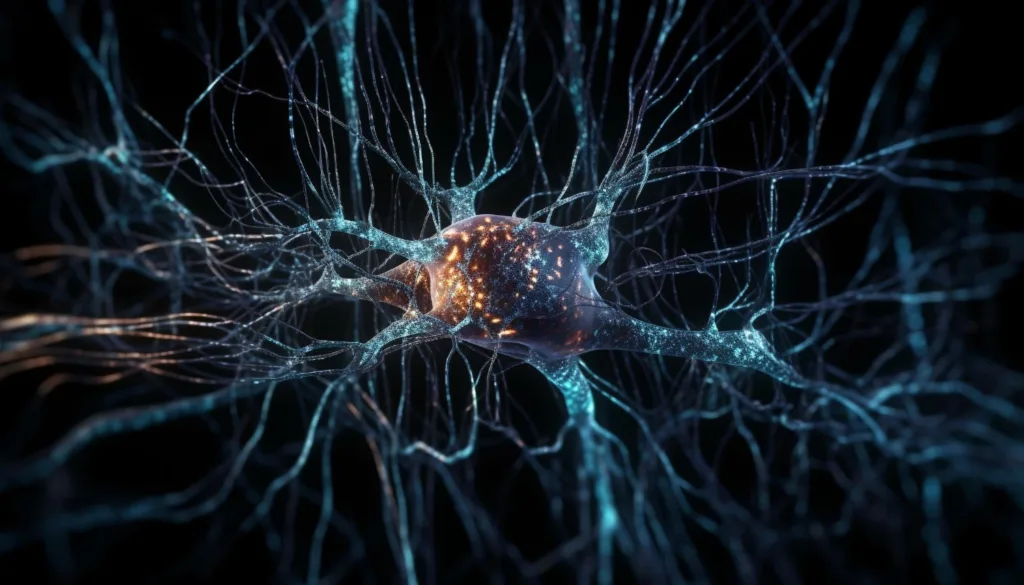
The human nervous system is responsible for receiving stimuli, processing information and coordinating the work of the whole body. It makes it possible to react quickly to changes in the surroundings and inside the body. It regulates movement, sensation, emotions, memory, concentration, sleep, muscle tone and the functioning of many organs. Its activity is closely linked to maintaining biological balance, known as homeostasis. To understand these tasks properly, it is worth getting to know the structure of the system, its divisions and the basic ways in which cells communicate.
What are the functions of the nervous system?
The tasks of the nervous system are based on three main processes: receiving information, integrating it and sending a response to specific tissues or organs. Receptors collect data from the surroundings and the inside of the body and pass it on to nerve structures. There, the signals are analysed, compared with previous experience and turned into a response. This is precisely why the role of this system goes far beyond simple reflexes – it also covers the control of behaviour, learning, memory and adaptation. You will find a broader description of this topic in the article The structure of the human nervous system, which helps to organise the basic concepts.
The anatomy of the nervous system and the division of tasks
The structure of the nervous system clearly shows that its efficiency depends on the cooperation of many structures. The central nervous system is made up of the brain and spinal cord, the main data-processing centres. The peripheral nervous system, in turn, comprises nerves, ganglia and nerve endings, which transmit signals between the body and the decision-making centres. In practice, every sensation, movement or reflex requires superbly organised communication. The anatomy and physiology of these structures help us understand why even minor disturbances in impulse conduction affect coordination, sensation, muscle tone or the body's general response to stimuli.
Neurons, synapses and impulses
The basic element of the system is the neuron – a cell specialised in receiving, conducting and transmitting impulses. Neurons communicate with each other via synapses, where the signal can be amplified, weakened or inhibited. Neurotransmitters play an important role here – molecules that carry information between cells. They are what make precise regulation of the brain, spinal cord and peripheral nerves possible.
Integrating information – how does the nervous system link stimuli with responses?
Integrating data is one of the main tasks of the nervous system. The body does not respond to each stimulus separately – instead, it analyses many pieces of information at the same time. The brain and spinal cord combine signals coming from the receptors for sight, hearing, touch, balance and pain, as well as from the internal organs. Only on this basis does an appropriate response arise: motor, hormonal, emotional or autonomic.
The most important stages of this process include:
- receptors picking up stimuli,
- the conduction of nerve impulses,
- the analysis of information in the central nervous system,
- the selection of the right response,
- the transmission of the signal to muscles, glands or organs.
This organisation means that the body responds quickly and at the same time appropriately to the situation. A good example is pulling your hand away from a hot surface – this happens reflexively, before you have even consciously assessed the danger. More complex processes, such as planning movement, concentrating or controlling emotions, require the cooperation of many brain areas and an extremely precise exchange of information.
Regulating organ function and the role of the nervous system
The influence of the nervous system can be seen clearly in the regulation of the internal organs. The heart, lungs, digestive tract, blood vessels and glands work at the command of nervous and hormonal signals. This allows the body to adjust heart rate, blood pressure, breathing, digestion and body temperature efficiently to current needs. When stress, physical exertion or a sudden change in temperature occurs, the nervous system immediately triggers the appropriate adaptive mechanisms.
Homeostasis of the body – why is the nervous system so important?
Homeostasis means maintaining stable internal conditions despite changes in the surroundings. This applies, among other things, to body temperature, glucose levels, water and electrolyte balance, blood pressure and acid–base balance. In this area, the human nervous system works closely with the endocrine and immune systems. Receptors constantly monitor the body's parameters, and the brain – especially the hypothalamus – coordinates the regulatory responses. Nutrients that support the condition of neurons also have a major influence on these processes, such as magnesium citrate with vitamin B6.
The somatic nervous system and motor control
The somatic nervous system is responsible for the conscious control of skeletal muscles and for receiving stimuli from the surface of the body. It is what allows you to perform precise movements, maintain your posture and respond to touch, pain, temperature or pressure. This area perfectly illustrates how anatomy and physiology translate into everyday functioning. Muscles do not work on their own – they need an impulse, constant feedback and the synchronisation of many muscle groups.
The autonomic nervous system – regulation without conscious control
The autonomic nervous system manages processes that take place entirely outside our awareness. It is responsible for the work of the heart, blood vessels, bronchi, pupils, digestive tract, bladder and glands. It is divided into the sympathetic and parasympathetic parts. The first mobilises the body for action, while the second supports rest, recovery and digestion. Maintaining homeostasis requires a perfect balance between these two systems, because the body must be able both to respond to stress and to return efficiently to a stable state.
The importance of the nervous system in science and laboratory research
The role of the nervous system goes far beyond anatomical descriptions. It is an extremely important area of biological research that helps us better understand the integration of signals, the regulation of vital functions and the mechanisms of adaptation. Scientists study, among other things, impulse conduction, synaptic plasticity, the influence of neurotransmitters and the interdependencies between the nervous, endocrine and immune systems.
Summary
The human nervous system is responsible for integrating stimuli, regulating organ function and stabilising vital processes. The speed of your reactions, motor control, information processing and the adaptive abilities of the whole body depend on it working efficiently. The somatic component takes care of conscious reactions and sensation, while the autonomic component manages processes independent of the will. Together they form a system that underpins the normal functioning of the whole body.


